
“We just completed this soft green Hardie siding install.”
That’s how Ivan opens the video – standing in front of a freshly finished exterior. Clean. Even. Consistent color across every panel.
But the color is almost secondary to what the material is doing underneath that surface.
Hardie siding – James Hardie fiber cement siding – isn’t just an upgrade. It’s a different category of exterior cladding. And in Florida’s climate, that difference is material.
Let me walk through what this product actually does, why it performs the way it does in Tampa Bay conditions, and when it makes sense to use it over vinyl or wood.
Answer: James Hardie siding is a fiber cement product. It is made from cement, sand, and cellulose fibers. It is not wood or vinyl. This gives it different performance in moisture, heat, and impact conditions.
Fiber cement doesn’t behave like either of its alternatives.
The material looks like traditional siding profiles – lap boards, shingles, vertical panels. It installs the same way. But the substrate is cement-based, and that changes how it responds to everything Florida throws at it.
At RIA Construction Corp, we’ve installed fiber cement siding across Tampa Bay, Clearwater, St. Petersburg, and coastal communities for over 20 years. The performance difference versus vinyl on coastal homes is real and visible after 10+ years.
Answer: Yes. James Hardie fiber cement siding is non-combustible.
It does not burn or support flames.
This can affect homeowner insurance premiums in Florida.
It is also relevant in communities with fire risk.
Most homeowners don’t think about fire resistance when choosing siding. It’s not usually the first question.
But it has practical implications:
It’s not the deciding factor for most projects. But it’s a real advantage that wood and vinyl don’t offer.
Answer: Fiber cement siding does not soak up water like wood does. This helps stop moisture from building up behind panels. It can prevent rot, mold, and structural damage. This matters in Tampa Bay’s humid weather all year.
Florida humidity is relentless. Not just in summer. Year-round.
What happens with wood in this environment:
What happens with fiber cement:
In real projects across Tampa Bay, we consistently see Hardie siding on 20-year-old homes in better structural condition than vinyl siding on homes half that age. The moisture resistance isn’t marketing – it’s measurable in what we find when we remove old siding during replacement projects.
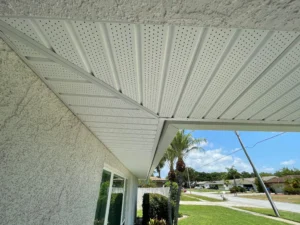
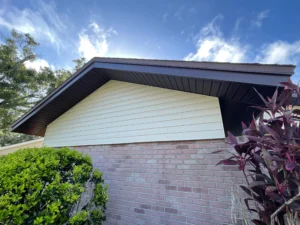
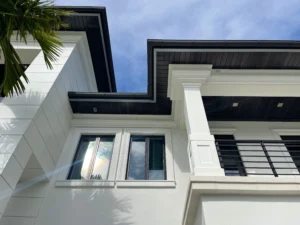
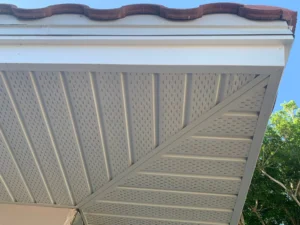
Answer: Fiber cement has high dimensional stability – it doesn’t swell from moisture absorption or significantly expand from heat cycles – which means the installation stays tight, seams stay sealed, and fasteners stay set over time.
Wood siding in Florida goes through this cycle repeatedly:
Fiber cement doesn’t follow that cycle.
From our experience working on coastal homes in Clearwater and St. Petersburg, dimensional stability is one of the most underappreciated advantages of Hardie board siding. Homes installed fifteen years ago look installed fifteen years ago – not failed.
Answer: ColorPlus is James Hardie’s factory-baked finish. It uses multiple coats applied in controlled conditions before shipping. In Tampa Bay, it often lasts 10-15+ years before repainting is needed. Field-applied paint in the same climate typically lasts 5-7 years.
ColorPlus factory finish:
Field-applied paint:
Florida’s UV intensity accelerates paint degradation faster than most of the country. In Tampa Bay, Clearwater, and coastal St. Petersburg, that gap between ColorPlus longevity and field-paint longevity is often even wider than national averages suggest.
One thing that affects ColorPlus longevity: cut edge sealing during installation. Every field cut on Hardie fiber cement siding needs to be primed and sealed at the job site. When installers skip that step-as they often do on rushed installs-moisture enters at the cut and the finish fails prematurely. At RIA Construction Corp, cut edge treatment is standard on every Hardie installation.
Answer: Yes. New fiber cement siding with a ColorPlus finish often delivers a top ROI at resale. It also improves curb appeal. A consistent, modern profile and factory color can change how the home looks from the street.
What the visual result actually produces:
For Tampa Bay homeowners planning to sell, this matters:
For homeowners staying long-term, the benefit is less maintenance and no repeat painting costs like other materials.
Answer: Fiber cement siding works well in Florida’s humid weather, strong UV sun, high winds, and coastal salt air. These conditions stress many siding materials, but they do not greatly affect fiber cement.
Florida’s climate creates a multi-front challenge for exterior cladding:
James Hardie siding addresses all five simultaneously. No metal components to corrode. Doesn’t fade at vinyl’s rate. Cement density handles impact. Moisture-resistant material handles humidity.
That’s why, for coastal homes across Tampa Bay, fiber cement siding is often recommended. It suits homeowners who want long-term performance over the lowest upfront cost.
Answer: Fiber cement siding replacement makes the most sense when existing siding is over 15 years old. It also helps when there is moisture damage, frequent repairs, or widespread wear. It is a good choice if the homeowner plans to stay long-term. It also works well in coastal or high-humidity areas.
Signs that siding replacement – not repair – is the right call:
Why professional installation matters specifically with Hardie:
At RIA Construction Corp, every siding replacement project starts with a full substrate inspection before panels go on. What’s behind the existing siding determines the real scope. That’s not optional – it’s what makes the installation last.
Answer: James Hardie fiber cement siding typically lasts 30-50 years in Florida’s climate with proper installation and basic maintenance. The fiber cement material itself doesn’t degrade from moisture, UV, or thermal cycling the way wood or vinyl does.
The main maintenance item is the painted finish – ColorPlus factory finish lasts 10-15+ years in Tampa Bay before repainting; field-applied paint needs attention at 5-7 years. From our experience working on Tampa Bay homes, properly installed Hardie siding on coastal properties consistently outlasts vinyl siding by a significant margin across equivalent installation periods.
Answer: Yes, relative to other materials. Fiber cement siding doesn’t require the sealing, repainting, or rot management that wood does in Florida humidity. Surface algae or mildew – common in Tampa Bay’s persistent humidity – is a surface cleaning issue, not a material failure.
The main ongoing maintenance is inspecting caulk and sealant at window and door transitions periodically, and repainting on a 10-15 year cycle if using ColorPlus. Compare that to wood siding’s 5-7 year repaint cycle in Florida conditions and the maintenance difference is significant over a 20-year ownership window.
Answer: Fiber cement siding handles coastal conditions well because it has no metal components that corrode in salt air, doesn’t absorb moisture, and its factory finish resists UV degradation better than field-painted alternatives.
In real projects across Clearwater, St. Petersburg waterfront neighborhoods, and Tampa Bay coastal properties, we consistently see Hardie siding in better condition after 10-15 years than vinyl or wood products on comparable homes. For coastal Florida homes specifically, the combination of salt air resistance, moisture resistance, and ColorPlus UV stability makes fiber cement siding one of the most practical long-term choices available at the residential level.
Answer: For most Tampa Bay homeowners planning to stay 10+ years, yes. The upfront cost of Hardie siding installation runs higher than vinyl – both in material and labor – but the long-term maintenance savings, durability advantage, and extended finish life change the total cost picture significantly.
Vinyl’s lower upfront cost often means more frequent maintenance, faster color degradation under Florida UV, and potentially earlier siding replacement. Hardie board siding at a higher upfront cost typically produces lower 20-year total cost of ownership in Florida’s climate. For homeowners planning to sell, the material quality and curb appeal also tend to return well at resale across the Tampa, Clearwater, and St. Petersburg markets.e and cost.