
That’s a question that comes up pretty much every time we sit down with a homeowner who’s ready to replace their siding.
And the honest answer? There’s no single best option for every house. It depends on the home, the budget, what the homeowner wants out of the finished product, and honestly – what Florida weather is going to do to that exterior over the next twenty years.
So let me walk through the main options we work with. What each one does well. Where each one has limitations. And how we usually help homeowners think through the decision.
Before getting into the materials, it’s worth explaining why siding replacement in Tampa Bay requires a different thought process than it does in most other parts of the country.
Florida puts exterior cladding systems through conditions that a lot of materials just weren’t designed for. Extreme humidity that persists year-round. Heat expansion cycles that stress panels and fasteners repeatedly. Hurricane-force wind loads. Coastal air that accelerates corrosion on metal components. UV exposure that’s more intense here than almost anywhere else in the continental US.
So when we’re talking about siding replacement options, we’re not just talking about what looks good. We’re talking about what holds up in a climate that’s genuinely hard on exterior materials.
That filters the conversation pretty quickly.
Vinyl is where most siding replacement conversations in Tampa Bay start. And there are good reasons for that.
Vinyl siding installation is the most cost-effective option for Florida homes. It doesn’t absorb moisture. It doesn’t rot. It doesn’t need painting. Modern vinyl products have come a long way – the thicker gauge products especially hold their shape well through Florida’s heat expansion cycles and don’t fade the way older vinyl used to.
Now here’s the thing about vinyl that sometimes surprises homeowners. The quality range is wide. There’s a significant difference between builder-grade vinyl and a thicker, higher-quality product. We see a lot of older Tampa Bay homes where the original vinyl siding was a thin gauge that’s now warping, cracking, or showing impact damage from storms. That’s not a vinyl problem exactly – it’s a product-grade problem.
When we do vinyl siding installation, we’re talking about products that are engineered to handle the wind load requirements Florida building codes specify. That matters. A thinner panel that looks similar on the surface may not have the same structural performance in a storm.
For most homeowners who want a durable, low-maintenance exterior at a realistic price point, vinyl is still the right answer.
Fiber cement – and most people know this by the James Hardie brand name – sits at a higher price point than vinyl. But there are situations where it’s clearly the better choice.
Fiber cement is a composite of cement, sand, and cellulose fibers. It’s dense. Impact-resistant. It won’t rot or swell from moisture. It’s non-combustible. And it holds a painted finish for significantly longer than wood does.
For homes in coastal areas around Tampa Bay where salt air is a factor, fiber cement tends to hold up better than vinyl over the long term. The material itself doesn’t corrode. And because it can be painted, homeowners have more flexibility with color and finish than they do with vinyl.
The tradeoff is cost. House siding installation with fiber cement runs more per square foot than vinyl – both in material and labor, because the panels are heavier and require different installation techniques. It also needs to be painted, which adds to the upfront cost and means occasional repainting over the years.
But for homeowners who are planning to stay in the house long-term and want the most durable exterior cladding available in the residential market? Fiber cement is usually worth the difference.
We’ve worked on a lot of homes around Tampa where the original vinyl or wood siding was failing, and the homeowners upgraded to fiber cement specifically because they wanted something they wouldn’t have to think about again for thirty years.
Wood siding is worth mentioning because some homeowners specifically ask about it. Usually it’s a style preference – they want the look of natural wood on the exterior.
And honestly? We understand that. Wood siding looks beautiful.
But in Tampa Bay, the maintenance burden of real wood siding is significant enough that we usually end up steering homeowners toward alternatives. Florida humidity is relentless. Wood swells, contracts, and if the paint or sealant fails – which it will eventually – moisture gets in and rot starts.
We’ve done siding repair and replacement on a lot of older homes in the area where the original wood siding had significant rot damage. In most of those cases, the homeowners weren’t neglecting maintenance. The climate just works against wood over time.
If the look of wood is the goal, fiber cement offers a lap siding profile that closely resembles wood without the moisture vulnerability. That’s usually the direction we recommend when wood aesthetics matter to the homeowner.
This is the part of siding replacement that doesn’t get talked about enough.
Whatever material goes on the outside, the wall system underneath has to be in good shape first. That means the sheathing, the house wrap, the flashing around windows and doors, and any structural framing issues all get addressed before new siding installation starts.
Why does this matter so much?
Because we’ve removed old siding on Tampa Bay homes and found things that weren’t visible from the outside. Compromised house wrap. Damaged sheathing from old water intrusion. Window flashing that was never installed correctly in the first place. All of that has to be corrected before new siding goes on.
I remember one project in Valrico – homeowner just wanted a straightforward siding replacement. When we pulled the old panels on one wall, the OSB sheathing had been wet long enough that it was starting to delaminate. Probably from a window seal failure. The homeowner had no idea.
If we’d just sided over that, we’d be sealing a moisture problem into the wall. And it would have gotten worse.
So part of what a residential siding contractor does during a siding replacement project is inspect the substrate and address what’s there before new material goes on. That’s not optional. That’s what makes the installation last.
When we’re replacing siding, the conversation usually turns to soffit and fascia at some point.
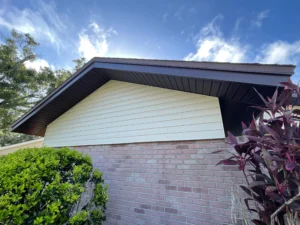
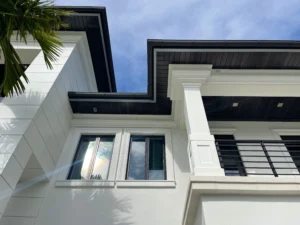
And here’s why that makes sense. If the existing soffit and fascia are aging or showing wear, doing soffit and fascia repair – or soffit replacement – at the same time as the siding project is more efficient than scheduling it separately. The crew is already there. The scaffolding or staging is already set up.
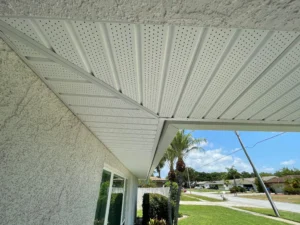
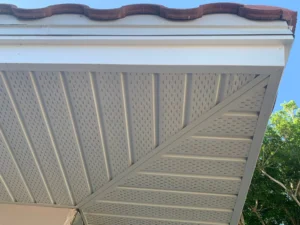
Aluminum soffit installation done at the same time as siding replacement means the whole exterior system gets refreshed in one project. New siding with deteriorating soffit panels creates a visual inconsistency that most homeowners don’t want. And more importantly, if the soffit is failing, it’s letting heat and moisture into the attic space – which affects the performance of everything above it.
Vented soffit installation specifically is worth paying attention to. Proper attic ventilation in a Florida home matters more than most people realize. The heat that builds up in an under-ventilated attic accelerates deterioration of roofing materials and drives up cooling costs. When we do soffit work as part of a larger exterior project, making sure the ventilation panels are functioning correctly is part of the scope.
When a homeowner calls us about siding replacement, the first thing we do is come out and look at the house.
Not because we’re trying to complicate a simple decision. But because the right answer genuinely depends on things we can only know by seeing the property. What’s the current substrate condition? What’s the architectural profile of the house – is it a simple shape or does it have a lot of detail work that affects installation cost? What’s the homeowner’s timeline and budget? Are they planning to sell in a few years or stay for the long term?
All of that shapes the recommendation.
For a homeowner with a tight budget who needs a reliable exterior that handles Florida weather, vinyl siding installation is almost always the right call. For a homeowner who wants the most durable long-term solution and has budget flexibility, fiber cement is usually the answer.
And in both cases, making sure the wall system underneath is sound before anything new goes on – that part doesn’t change.
For most Tampa Bay homes, vinyl siding installation offers the best combination of durability, moisture resistance, and cost-effectiveness. For homeowners who want a premium long-term solution, fiber cement siding handles Florida’s humidity, heat, and storm exposure exceptionally well. The right choice depends on budget, home style, and how long the homeowner plans to stay in the property.
Most residential siding replacement projects run anywhere from a few days to a week or more, depending on house size, material choice, and substrate condition. If the inspection reveals issues underneath the old siding that need to be addressed first, that can extend the timeline. A proper scope estimate from your contractor before the project starts should include realistic timing.
For homeowners planning to stay long-term, fiber cement is often worth the premium. It’s denser, more impact-resistant than vinyl, and holds up well against coastal air and Florida humidity. The upfront cost is higher and it requires painting, but the durability over a 30-year window usually justifies the difference for homes in Tampa Bay’s climate.
Removing old siding gives us the opportunity to inspect the wall sheathing, house wrap, and flashing behind it. In many cases on older Tampa Bay homes, we find moisture damage or compromised substrate that wasn’t visible from outside. That has to be corrected before new siding installation begins – siding over a damaged wall seals the problem in and makes it worse over time.
If the soffit and fascia are aging, doing soffit replacement or aluminum soffit installation at the same time as siding is more efficient and cost-effective than scheduling separate projects. The crew and staging are already on site, and refreshing the full exterior system at once creates a cohesive result. Functional soffit ventilation also matters for attic airflow, which affects the whole house performance in Florida’s climate.
When damage is widespread across multiple walls, when the substrate behind the panels is compromised, or when the siding is simply at the end of its functional lifespan, replacement usually makes more sense than continued repair. A residential siding contractor can assess the current condition and tell you honestly whether targeted siding repair will solve the problem or whether replacement is the better long-term investment.