
In Sarasota, siding repair works for isolated damage on newer installations — but replacement is typically required when siding is over 15 years old, damaged across multiple wall sections, or when moisture has already compromised the wall assembly system behind the panels.


Most Sarasota homeowners with isolated siding damage can repair — but when damage appears in multiple areas, the substrate behind the panels is compromised, or the siding is 15+ years old in a coastal climate, replacement is the more cost-effective long-term decision.
This is the first question that comes up on almost every estimate we do in Sarasota. And the honest answer is: it depends on what’s actually going on behind the panels.
The surface tells you part of the story. What’s underneath tells you the rest.
Many homeowners searching for a siding contractor near them in Sarasota are dealing with damage that looks surface-level but turns out to involve the substrate once panels are removed. That’s not unusual in a coastal climate — it’s the expected pattern.
Key takeaway: In Sarasota’s salt air and humidity environment, siding problems compound faster than in inland climates — the decision timeline is shorter here.
Why this matters in Sarasota: Gulf Coast conditions — persistent salt air, intense UV, and storm-season wind events — stress exterior cladding from multiple directions simultaneously. What’s a borderline repair situation elsewhere often crosses into replacement territory here.
Situation | Repair | Replacement |
Isolated damage, 1–2 panels | ✔ | |
Damage across multiple wall sections | ✔ | |
Substrate or sheathing damage found | ✔ | |
Siding 15+ years old in coastal Sarasota | ✔ | |
Recurring repairs on same areas | ✔ | |
Color mismatch from fading | ✔ | |
Newer installation, intact substrate | ✔ |
Quick Summary: This table covers the most common scenarios — but substrate condition is always the deciding variable. You don’t know the full answer until a panel comes off.
Answer: Siding repair in Sarasota makes sense when damage is genuinely isolated — one or two impacted panels, a small area of cracking near a window, or a section that took storm debris — and the wall substrate behind it is intact.
Not every damaged panel means a full replacement is coming. There are situations where targeted siding repair is the right call.
Repair typically makes sense when:
At RIA Construction Corp, we inspect the substrate before committing to repair scope on any Sarasota project. A panel that looks like a repair situation on the surface sometimes reveals damaged OSB or plywood sheathing once it comes off — and that changes the answer entirely.
Key takeaway: Siding repair near me in Sarasota only works when the problem is actually contained to the surface layer. On coastal properties, it often isn’t.
Why this matters in Sarasota: Wind-driven rain from Gulf storms and persistent humidity make it more likely that moisture has penetrated beyond the panel surface. Siesta Key and Longboat Key properties with direct coastal exposure are especially prone to substrate damage that isn’t visible until panels are removed.
Quick Summary: Repair is the right call when damage is isolated, the siding is newer, and the wall assembly system behind it is intact. In coastal Sarasota, confirm all three before committing.
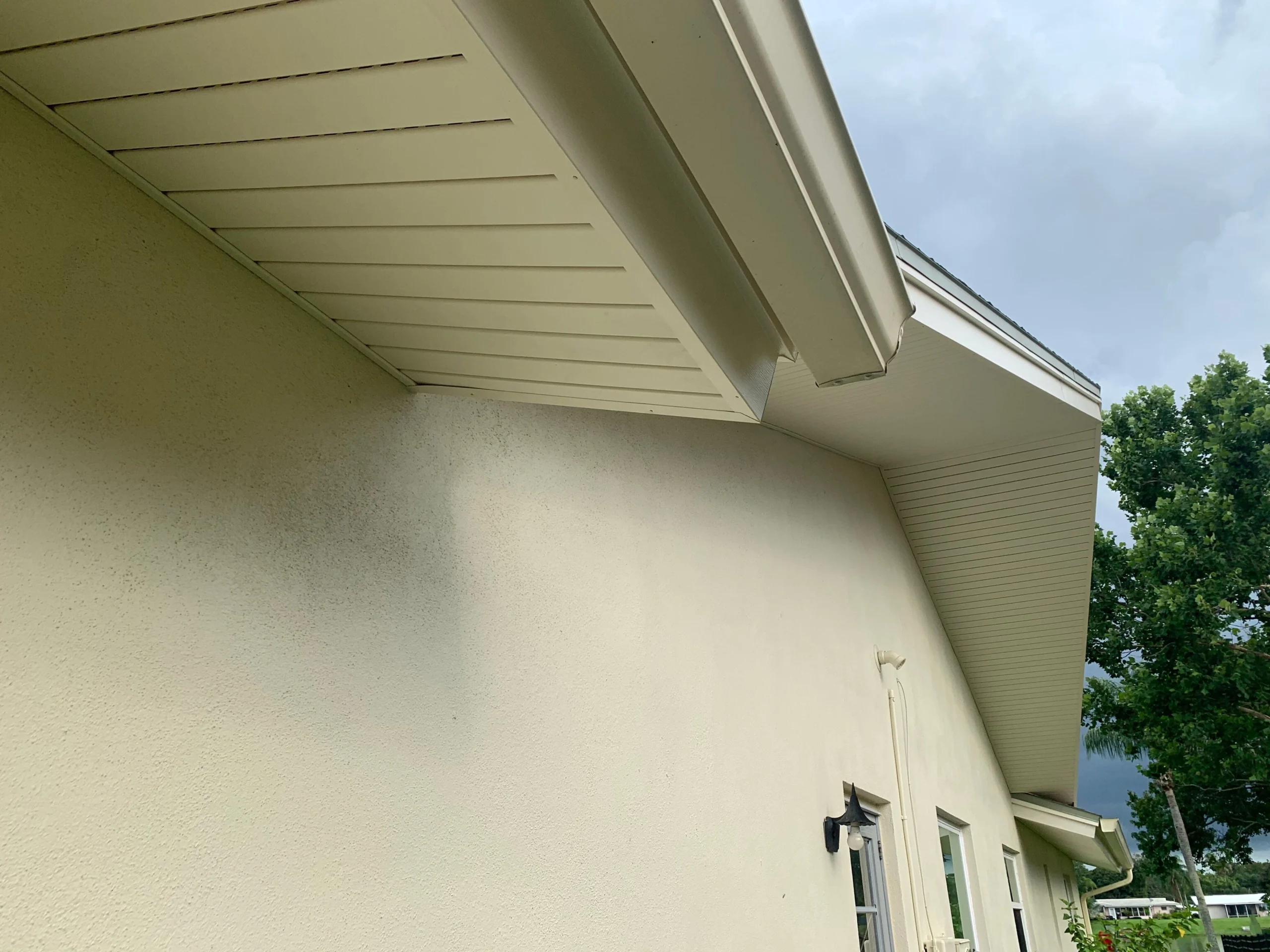
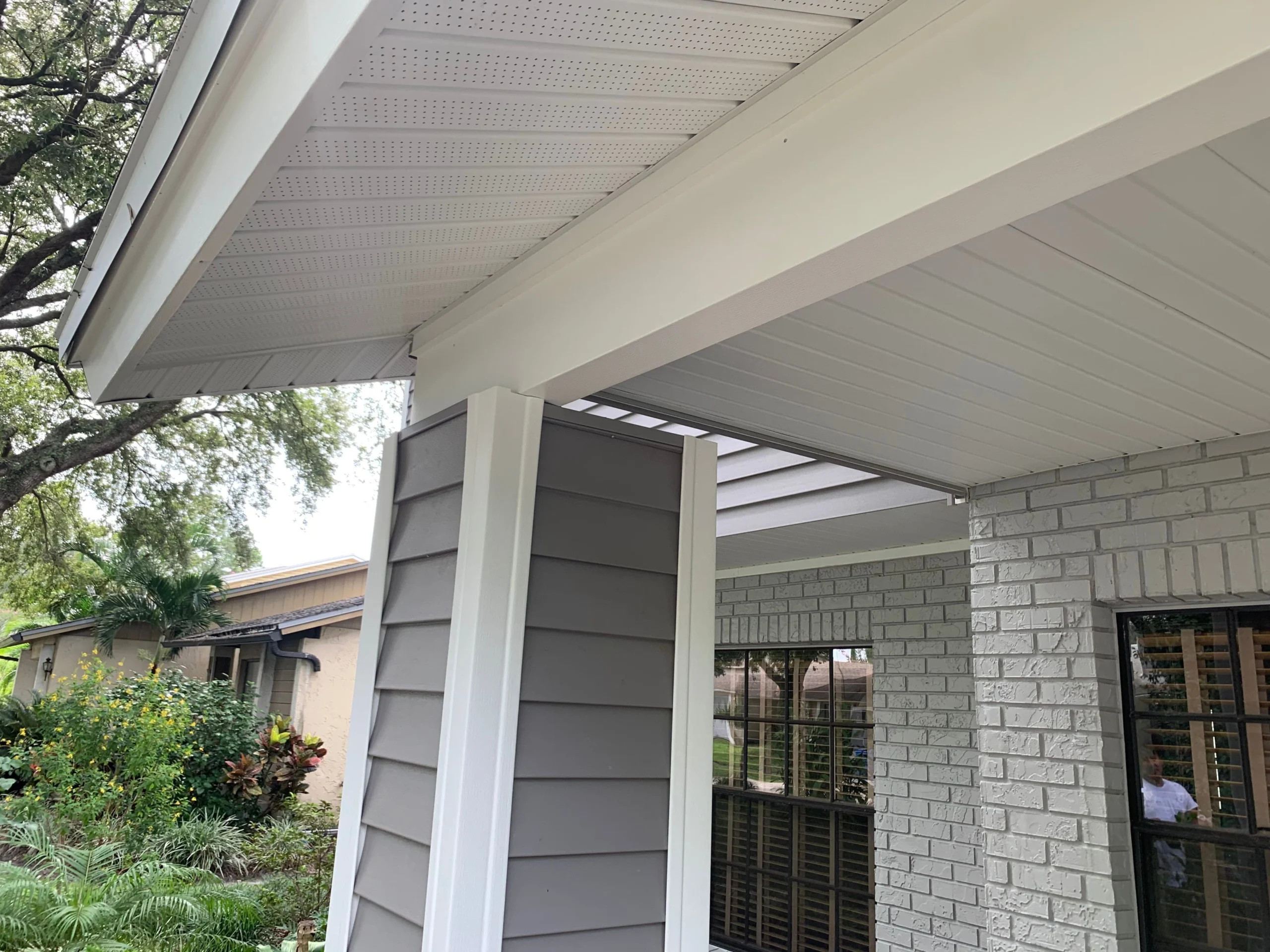
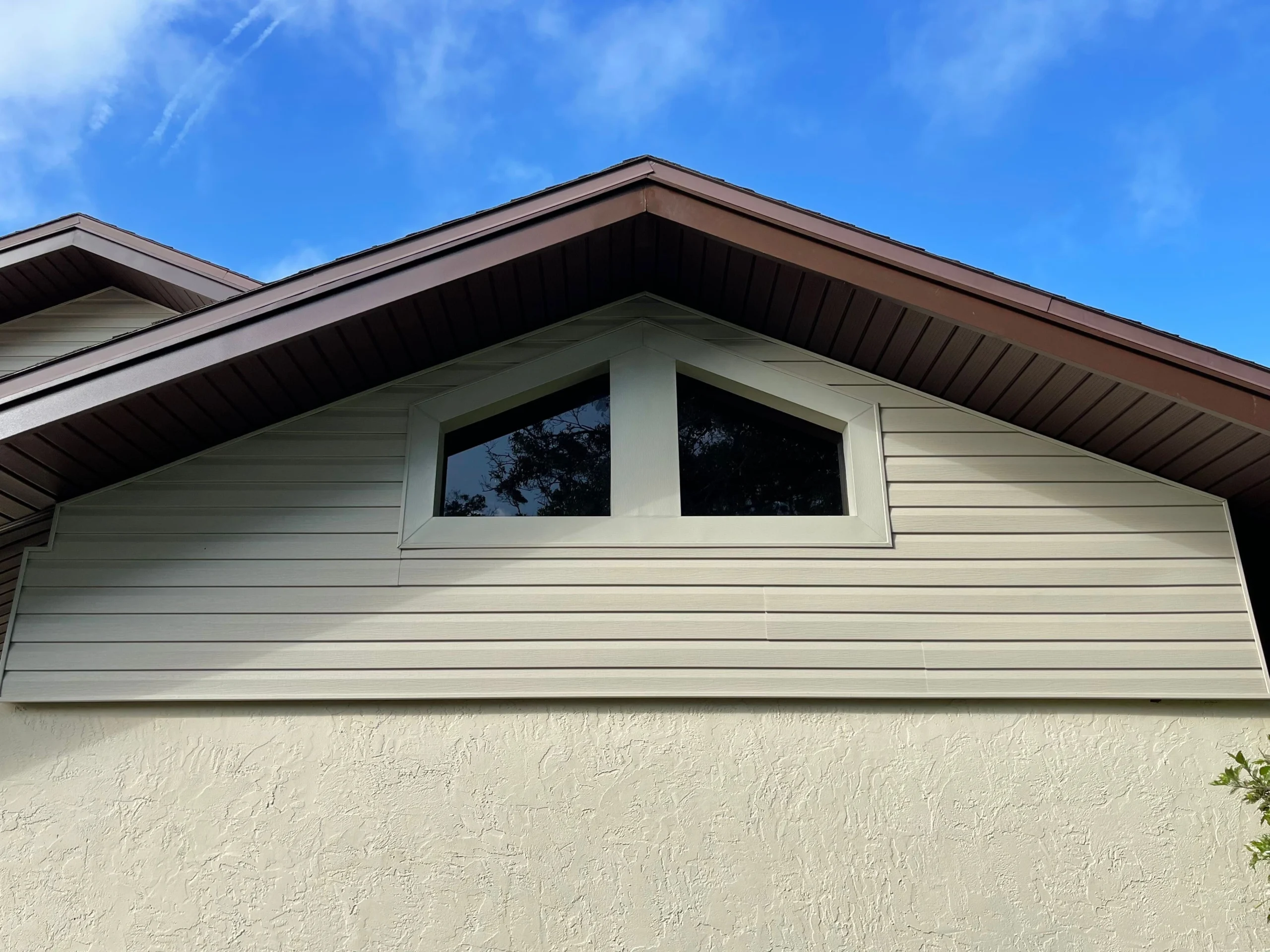
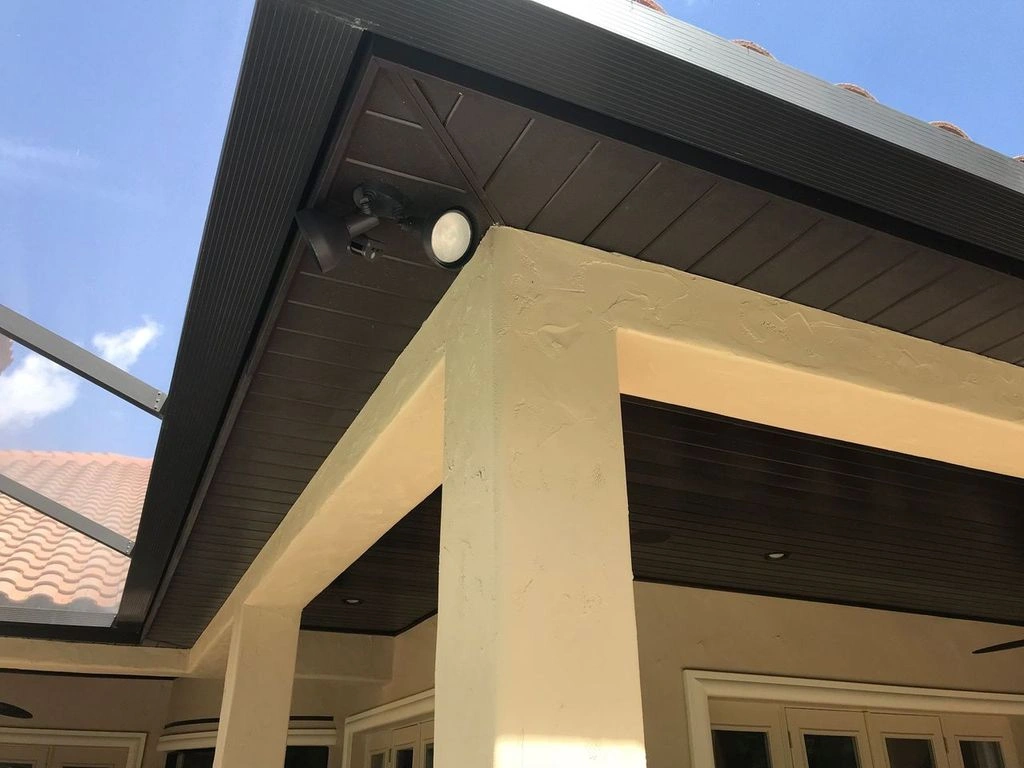
Our siding installers complete Hardie board siding installation, fiber cement siding work, composite siding services, vinyl siding improvements, and metal siding applications with techniques centered on stability, clean alignment, and accurate fastening. Homeowners in Bradenton who receive siding replacement services gain a stronger, cleaner exterior designed to withstand local conditions.
Full siding replacement in Sarasota is warranted when damage appears across multiple wall sections, siding is 15+ years old and showing climate-related deterioration, or substrate inspection reveals rot, failed vapor barrier, or compromised OSB or plywood sheathing.
This is where homeowners sometimes push back. Because from the street, the house might not look that bad.
But the indicators that add up to replacement rather than repair are:
In real projects across Sarasota and coastal communities like Siesta Key and Longboat Key, we see one pattern consistently: homeowners who delayed siding replacement past the warning signs ended up with a larger, more expensive scope because the substrate damage had time to spread.
Key takeaway: When the signs appear across multiple areas, each repair is just managing a bigger problem rather than solving it.
Why this matters in Sarasota: Sarasota’s Gulf Coast salt air accelerates caulk and sealant failure at window and door transitions. Once those points fail, wind-driven rain during storm season enters the wall assembly system directly — and the substrate damage that follows is often more expensive than the siding replacement that could have addressed it earlier.
If you want to understand the most common ways this damage starts, see our full guide to common siding installation mistakes that lead to premature replacement on Florida homes — it covers the failure patterns we see most often on Sarasota properties.
Quick Summary: Multiple failure points, aging siding, and any substrate damage found on inspection are the clearest indicators that siding replacement in Sarasota is the right scope — not repair.
When moisture has penetrated behind siding panels and damaged the wall sheathing or framing, repairing the surface siding alone doesn’t solve the problem — the substrate must be addressed first, which often makes full replacement the more logical and cost-effective scope.
This is the part most homeowners don’t anticipate before work starts.
The siding panel is the outermost layer of a multi-layer wall assembly system. Behind it:
When that system is compromised, putting new siding panels over it is cosmetic. The moisture damage continues behind the new material.
What we typically find during substrate inspection on older Sarasota homes:
From our experience working on Gulf Coast properties throughout Sarasota, the substrate condition we find behind old siding is more often compromised than intact. That’s not unusual — it’s a product of the climate and the installation standards of the era when most of these homes were built.
Key takeaway: Substrate damage turns a siding repair job into a wall system rebuild. The siding replacement is actually the smaller part of the scope.
Why this matters in Sarasota: High humidity year-round, combined with salt air in coastal neighborhoods, means moisture intrusion behind siding doesn’t dry out between rain events the way it might in a drier climate. Damage compounds quietly and continuously.
Quick Summary: If the vapor barrier system or OSB sheathing behind the panels is compromised, surface-level repair is not a solution. The wall assembly has to be rebuilt correctly before anything new goes on.
This is the first question that comes up on almost every estimate we do in Sarasota. And the honest answer is: it depends on what’s actually going on behind the panels.
The surface tells you part of the story. What’s underneath tells you the rest.
Many homeowners searching for a siding contractor near them in Sarasota are dealing with damage that looks surface-level but turns out to involve the substrate once panels are removed. That’s not unusual in a coastal climate — it’s the expected pattern.
Key takeaway: In Sarasota’s salt air and humidity environment, siding problems compound faster than in inland climates — the decision timeline is shorter here.
Why this matters in Sarasota: Gulf Coast conditions — persistent salt air, intense UV, and storm-season wind events — stress exterior cladding from multiple directions simultaneously. What’s a borderline repair situation elsewhere often crosses into replacement territory here.
Answer: Sarasota’s Gulf Coast climate — salt air, year-round humidity, intense UV, and seasonal hurricane exposure — shortens the functional lifespan of most siding materials compared to inland Florida or other US regions, making material selection and installation quality more consequential here than elsewhere.
Sarasota’s climate applies pressure to exterior cladding from multiple directions simultaneously:
The combined effect is that exterior cladding on Sarasota homes typically shows wear earlier and requires earlier attention than comparable homes in inland or northern climates.
Bottom line: In Sarasota’s Gulf Coast climate, the 15–20 year siding replacement timeline common in other regions is often closer to 12–15 years for vinyl, and 20–25+ years for properly installed James Hardie fiber cement siding.
Why this matters in Sarasota: Homeowners in Lakewood Ranch dealing with humidity and UV are in a different situation than homeowners on Longboat Key dealing with direct salt air. Both face challenging conditions — but the failure modes differ, and the material selection should reflect that.
Quick Summary: Sarasota’s multi-front climate stress means exterior cladding ages faster here than nearly anywhere else in the country. Material choice and installation quality are not optional considerations — they determine how long you go before the next project.
Answer: For most Sarasota homeowners prioritizing long-term performance in coastal conditions, James Hardie fiber cement siding outperforms vinyl across moisture resistance, UV stability, dimensional stability, and impact resistance — though vinyl remains a practical option for budget-constrained projects with proper installation.
This comparison comes up on almost every Sarasota replacement project. Both materials work. But they don’t perform equally in Gulf Coast conditions.
Factor | Vinyl Siding | James Hardie Fiber Cement |
Upfront cost | Lower | Higher |
UV resistance in Florida | Medium — fades in 7–10 yrs | High — ColorPlus lasts 10–15+ yrs |
Moisture resistance | Medium | High — cement base doesn’t absorb |
Salt air resistance | Moderate | High — no metal components to corrode |
Heat expansion | Significant — can buckle | Low — dimensionally stable |
Impact / storm resistance | Lower | Higher — cement density |
Lifespan in Sarasota | 15–20 years | 30–50 years |
Florida Building Code wind-load compliance | Yes — when properly installed | Yes — when properly installed |
Maintenance cycle | Repaint: 5–7 yrs | Repaint: 10–15+ yrs (ColorPlus) |
Vinyl siding in Sarasota — the honest picture:
James Hardie fiber cement siding in Sarasota:
At RIA Construction Corp, we typically recommend James Hardie fiber cement siding for Sarasota properties within a mile of the Gulf or Sarasota Bay, for homes with significant south or west wall exposure, and for any homeowner planning to stay in the property for 15+ years. For inland Lakewood Ranch properties or budget-constrained projects, quality vinyl with a proper vapor barrier system and Florida Building Code-compliant installation performs well.
Key takeaway: The higher upfront cost of fiber cement siding replacement in Sarasota typically produces lower total cost of ownership over 20+ years compared to vinyl — primarily because of the finish longevity and the elimination of moisture-related repair cycles.
If you’re comparing materials, see our full guide to Hardie siding vs vinyl in Sarasota for a detailed cost and long-term performance breakdown specific to Gulf Coast conditions.
Quick Summary: Vinyl works in Sarasota — but it ages faster in coastal conditions. For Gulf-exposed properties or long-term ownership, James Hardie fiber cement siding consistently outperforms vinyl on the metrics that matter most in Florida’s climate.
Answer: Siding repair in Sarasota typically costs significantly less upfront than replacement — but when repairs are required repeatedly, or when substrate damage is involved, the cumulative cost of repair often exceeds the one-time cost of replacement within 5–7 years.
This is where homeowners sometimes make a decision that feels financially conservative but isn’t.
The average siding replacement cost in Sarasota varies based on three main factors: material choice, labor complexity, and substrate condition found during inspection. Fiber cement installation runs higher than vinyl in both material and labor — but when substrate damage like rotted OSB sheathing or a failed vapor barrier system is found, that repair scope adds to the total regardless of which surface material is chosen. What impacts siding replacement cost in Sarasota most significantly is often not the panels themselves — it’s the condition of what’s behind them.
How to think about siding replacement cost in Sarasota honestly:
In real projects across Sarasota, homeowners who chose repair over replacement on older coastal-exposed siding typically came back for full replacement within 3–5 years — often with more substrate damage to address because the interval gave moisture more time to work.
For a clearer breakdown of what fiber cement siding installation actually costs in the Sarasota market, see our full guide to fiber cement siding cost in Sarasota, FL — including how material selection, substrate condition, and coastal location affect the final number.
Bottom line: Siding repair near me in Sarasota is cheaper on day one. Siding replacement is usually cheaper across a 10-year window when the existing siding is past its reliable service life in coastal conditions.
Why this matters in Sarasota: Salt air and humidity in coastal Sarasota don’t pause between repair intervals. Each year that compromised siding stays in place is a year of continued moisture intrusion into the wall assembly system.
Quick Summary: The siding repair vs replacement cost decision in Sarasota isn’t just about today’s invoice — it’s about what the total spend looks like over five to ten years, especially when the substrate is already showing wear.
Answer: Sarasota’s combination of Florida Building Code wind-load requirements, coastal salt air, and year-round humidity means that installation quality — substrate inspection, vapor barrier continuity, window flashing, and fastening pattern — directly determines how long siding performs before problems develop.
The material matters. The installation matters more.
What a professional siding installation in Sarasota must include:
From our experience working on Sarasota homes, the installation step that gets skipped most often on rushed projects is cut edge sealing on fiber cement — and it’s one of the most predictable failure points we see when inspecting older Hardie installations.
Key takeaway: In Sarasota’s coastal climate, an improperly installed siding system — regardless of material quality — will fail earlier and require repair or replacement sooner than a correctly installed lesser material.
Why this matters in Sarasota: Gulf-season wind events test fastening patterns in real conditions. Salt air finds every unsealed penetration. These aren’t theoretical risks — they’re predictable outcomes from installation shortcuts.
To understand the specific errors that lead to early failure on Florida coastal homes, see our full guide to common siding installation mistakes and what they cost Sarasota homeowners to fix.
Quick Summary: In Sarasota, the contractor doing the work matters as much as the material being installed. Florida Building Code compliance, vapor barrier continuity, and substrate inspection are non-negotiable on any coastal project.
Not all siding contractors in Sarasota approach projects the same way. The variation in how they inspect, specify, and install is significant — and in a coastal climate, those differences show up in how long the finished work actually lasts.
Here’s what to look for when evaluating a siding contractor near you in Sarasota:
Bottom line: The cheapest siding contractor in Sarasota is often the most expensive over a five-year window. The right question isn’t who can do it cheapest — it’s who will do it correctly once, so it doesn’t have to be done again.
Answer: Before committing to either repair or replacement, Sarasota homeowners should have a contractor physically inspect the wall substrate — not just quote from the surface — to determine whether the underlying wall assembly system is intact and what the real scope of work actually is.
The exterior surface tells part of the story. The substrate tells the rest.
What a pre-project inspection should cover on a Sarasota home:
Interior signs sometimes indicate exterior problems worth investigating:
In coastal homes across Sarasota and Siesta Key, the most expensive surprises in siding projects happen when substrate condition isn’t assessed before work begins. A proper pre-project inspection eliminates that variable.
Quick Summary: Get a substrate inspection before agreeing to repair or replacement scope. The surface condition and the wall assembly condition are two different things — in Sarasota’s climate, they frequently tell different stories.
Answer: Vinyl siding typically lasts 15–20 years in Sarasota’s Gulf Coast conditions. James Hardie fiber cement siding lasts 30–50 years with proper installation and maintenance.
The gap reflects how differently the two materials respond to Sarasota’s combination of salt air, sustained humidity, UV intensity, and storm-season wind events. Vinyl fades and becomes more brittle under Florida UV over time. James Hardie fiber cement siding’s cement-based substrate doesn’t degrade from those same conditions. From our experience working on Gulf Coast properties, the lifespan difference between correctly installed fiber cement and vinyl is consistently visible after 15+ years on comparable Sarasota homes.
Answer: Yes — James Hardie fiber cement siding is one of the best options for coastal Sarasota homes because it has no metal components to corrode in salt air, doesn’t absorb moisture, and its ColorPlus factory finish resists UV degradation better than field-painted alternatives.
Properties in direct coastal locations on Siesta Key, Longboat Key, and along Sarasota Bay face conditions that accelerate deterioration in most siding materials. Salt air corrodes metal fasteners and degrades painted surfaces. Wind-driven rain during Gulf storms finds every gap and penetration in the wall assembly system. Fiber cement’s density, moisture resistance, and non-combustible classification address those conditions more completely than vinyl or wood. At RIA Construction Corp, fiber cement siding is our consistent recommendation for Sarasota properties within close proximity to the Gulf or bay.
Answer: James Hardie fiber cement siding performs best in Sarasota’s salt air and humidity because the cement-based wall assembly doesn’t absorb moisture, doesn’t corrode, and doesn’t swell — the three failure modes Florida’s coastal climate accelerates most aggressively in other materials.
For homeowners in Lakewood Ranch or inland Sarasota County where direct salt air exposure is lower, quality vinyl siding with a correctly installed vapor barrier system is a practical lower-cost option. The further from the Gulf, the more competitive vinyl becomes on a cost-versus-performance basis. The closer to coastal exposure, the more the fiber cement durability advantage justifies the higher upfront siding replacement cost in Sarasota.
Answer: For most Sarasota homeowners planning to stay in the property 10+ years, yes — the higher upfront cost of James Hardie fiber cement siding installation is typically offset by lower total maintenance cost, longer finish lifespan, and the elimination of early replacement cycles that vinyl in coastal conditions often requires.
Vinyl siding in Sarasota may need color maintenance in 7–10 years and full replacement in 15–20 years. Hardie board siding with ColorPlus factory finish goes 10–15+ years before repainting and 30–50 years before structural replacement. Over a 20-year ownership window in Sarasota’s coastal climate, James Hardie fiber cement siding consistently produces lower total cost of ownership than vinyl — despite the higher initial investment. For homeowners planning to sell, the material quality and updated curb appeal also return well at resale in Sarasota’s residential market.
Most siding problems in Sarasota aren’t fully visible from the surface. The real condition of your wall assembly system — sheathing, vapor barrier, flashing, framing — only becomes clear when a contractor actually inspects it.
Here’s what a proper siding inspection with RIA Construction Corp includes:
We serve Sarasota, Siesta Key, Longboat Key, Lakewood Ranch, and surrounding Gulf Coast communities.
Schedule your siding inspection in Sarasota today.
📞 (727) 560-5025 | 🌐 riaconstructioncorp.com
