
Soffit and fascia installation in Tampa Bay doesn’t have a single flat price – cost depends on what’s actually found on each individual home. Material, existing condition, architectural details, and how previous work was done all affect the final number. Most projects in the Tampa Bay area range from $9 to $34 per linear foot for combined soffit and fascia work, but that range exists for a reason.
“A lot of clients ask me – so how much is it gonna cost to replace fascia, or install a new one, or a Hardie board?”
That’s the question Ivan Rodimushkin, founder of RIA Construction Corp, gets on almost every estimate call.
And his honest answer? “Very hard question. It’s hard to say because we don’t see the details.”
Not because contractors are avoiding the question. Because the details of each home genuinely change the answer. What looks like a simple soffit or fascia job from the street can turn into something more involved once you’re actually standing on the ladder looking at it.
So the goal of a proper estimate isn’t to give a number as fast as possible. It’s to actually inspect the home first – and then give you a number that won’t change once work starts.
Every home has its own story. And its own structural conditions. That’s not a phrase – it’s a real thing that shows up on every project.
Here’s what changes the cost:
Some of those variables you can estimate. Others you can only confirm by actually being there.
Ivan explains this with a project he was standing on at the time of filming.
A client hired another contractor to install soffit. Then hired Ivan to install the fascia afterward. Seems simple enough.
“Right here you can see how another contractor installed soffit – and now we can see how installed soffit is below surface line of the fascia.”
That’s the problem. The soffit was installed slightly too low – below the line where the fascia needs to sit to be level and properly aligned.
So now Ivan has three options. None of them were in the original scope.
“What does it mean for me? I have to either repair that soffit, which is additional cost, I have to remove it and did the trim differently, or I have to install my fascia below proper level line and try to level this up on entire fascia along the side.”
None of those options were visible from a photo or a phone call. They only became clear on site.
And this is where people get it wrong – they think soffit and fascia are two separate, simple items. They’re part of the same system. When one is installed out of position, the other has to compensate. And compensating adds cost.
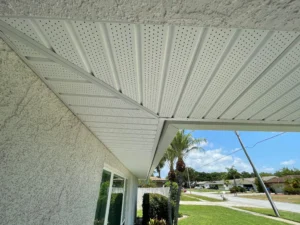
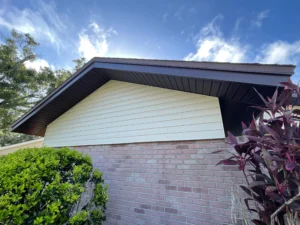
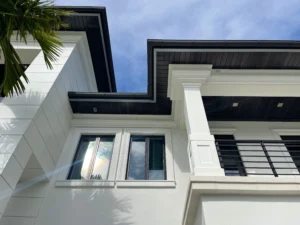
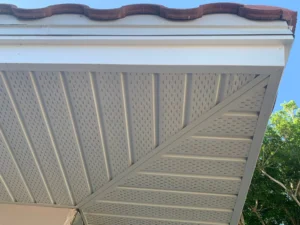
General ranges – useful as a starting point, not a quote:
What impacts soffit and fascia replacement cost in Tampa Bay specifically:
So when someone searching for soffit and fascia installation cost near them in Tampa Bay gets wildly different numbers from different contractors – this is usually why. The quotes aren’t wrong. They’re just based on different assumptions about what the job actually involves.
Not every situation requires a full replacement. Sometimes it doesn’t.
Repair makes sense when:
Replacement is usually the right call when:
And sometimes you don’t know which category applies until panels come off. That’s not a sales tactic. That’s just how exterior systems work, especially on homes that have been through several Florida storm seasons.
If you’re weighing repair versus full replacement on your roofline components, see our full breakdown of when soffit and fascia repair makes sense versus when full replacement is the right scope on Tampa Bay homes – it covers the substrate conditions that change the answer.
“That’s why it’s very hard to figure out the cost without actually seeing the job and properly inspecting the job.”
That’s Ivan’s conclusion from the job site. And it applies to every project.
A proper inspection before quoting should cover:
Skipping that step produces a quote that changes once work starts. That’s where project surprises come from – not from contractors being difficult, but from details that couldn’t be seen until the job was actually opened up.
Many homeowners searching for a soffit and fascia contractor near them in Tampa Bay get initial quotes that seem low – and then face additional costs mid-project. The reason is almost always that the original quote didn’t account for substrate condition, alignment issues, or coordination requirements with existing work.
For a more detailed look at how installation quality affects how long your soffit and fascia systems last in Florida’s climate, see our guide to common soffit and fascia installation mistakes on Tampa Bay homes and what they cost to fix.
Most Tampa Bay projects fall in the range of $9–$34 per linear foot for combined soffit and fascia work. Simpler rooflines with intact substrates sit toward the lower end. Homes with moisture damage, prior installation issues, or architectural complexity run higher. A proper on-site inspection is what produces an accurate number – phone estimates for this kind of work are starting points, not real quotes.
Because the details are different in every estimate. One contractor may be quoting surface material only. Another may be including substrate repair, alignment corrections, or coordination with existing work. The variation in quotes usually reflects variation in what each contractor actually looked at – which is why inspection quality matters as much as price.
Sometimes. If damage is isolated and the substrate behind the panels is intact and dry, targeted repair is the right call. But if moisture has gotten into the sheathing or framing behind the soffit, or if prior installation work has put components out of alignment, repair at the surface level doesn’t solve the underlying problem. In Tampa Bay’s climate, substrate damage from humidity and storm-driven rain is more common than homeowners expect – it often only becomes visible when panels come off.
Aluminum and vinyl soffit and fascia systems generally last 20–40 years in Florida conditions when properly installed. Wood deteriorates faster in Tampa Bay’s humidity – often showing moisture damage within 10–15 years, especially on south and west exposures. The real factor isn’t just material – it’s whether the installation was done correctly the first time. A misaligned or improperly fastened system fails earlier regardless of material quality, which is what Ivan’s job site example illustrates directly.