
Soffit and fascia can often be repaired after hurricane damage if the damage is isolated to one section, the wood underneath is solid with no rot, and only the ventilation panels need replacement. Full replacement is required when structural integrity is compromised. The condition of the framing underneath, not the surface appearance, determines which path is right.
Every storm season, homeowners across Tampa Bay look up at their rooflines and see damage. Bent soffit panels. Detached fascia boards. Ventilation panels that are cracked or missing entirely. The instinct is to assume everything needs to come down and start over. That’s not always true. But it’s also not always wrong. The answer depends on what actually happened to the structure beneath the visible damage, and you can’t determine that from the ground.
“We look for three main things.”
That’s the practical framework. Three conditions. If all three point the right way, repair is on the table. If any one of them doesn’t, the conversation shifts toward replacement.
Storm damage doesn’t always spread. A strong wind event or hurricane can lift or crack a soffit panel in one area while the surrounding sections stay completely intact. That’s the best-case scenario, and it’s more common than people expect.
If the damage is contained to one section of the soffit run, there’s no structural reason you can’t repair that section without touching the rest. The materials around it are undamaged. The framing behind it is continuous. Removing and replacing the affected panels in that zone is a legitimate and appropriate repair.
What changes the calculation is when the damage has spread. Multiple sections lifting or detaching. Long runs of fascia that have separated from the framing behind them. In those cases, the question stops being about the surface and starts being about why the damage covered that much area and what it means for the structure underneath.
So the first thing to establish is: how far does the damage actually go? That’s not always obvious from a visual inspection from the ground. It requires getting up and looking at the actual condition of the material and framing in the affected zone.
“Is the wood underneath still solid with no rot?”
This is the critical question. And it’s the one that most homeowners can’t answer without a proper inspection, because the wood condition isn’t visible from the outside when the soffit panels are in place.
Soffit and fascia systems sit at the roofline. Their job is to close off the underside of the roof overhang and protect the rafter ends from weather. When those systems are breached, whether from a storm event or from years of slow moisture infiltration, water gets into the wood framing behind them. And in Florida’s humidity, wood that’s been wet doesn’t dry out the way it would in a drier climate. It stays damp. It develops rot. And rot spreads.
A soffit panel that’s been missing or damaged for weeks after a hurricane has been letting moisture into the rafter structure behind it every time it rains. By the time a contractor gets up there to assess the situation, what looked like a surface repair from the ground can reveal rotten fascia boards, softened rafter ends, and framing that no longer has the structural integrity to support a repair. You put new panels over that substrate and the problem continues underneath.
Solid wood means solid wood. No soft spots. No discoloration from moisture staining. No flex when pressure is applied. If the framing passes that test, repair is structurally sound. If it doesn’t, the rotten material needs to come out before anything new goes on top of it. That’s not optional. That’s what determines whether the repair lasts.
RIA Construction has assessed soffit and fascia damage across Tampa Bay after multiple hurricane seasons. The most common surprise isn’t the storm damage itself, it’s what the storm damage reveals about moisture infiltration that was already there before the storm hit. A hurricane that tears off a section of soffit didn’t necessarily cause all the rot behind it. In some cases, it just made existing damage visible for the first time.
“Do only the panels need a quick refresh?”
Soffit ventilation panels are the perforated or screened sections built into the soffit system that allow air to flow into the attic space. They’re also some of the most commonly damaged components in a wind event because they’re lightweight, they have perforations that catch wind loading, and they’re designed to be replaced without disturbing the surrounding structure.
If a storm knocked out ventilation panels but left the surrounding soffit material intact and the wood framing behind it solid, replacing just those panels is a straightforward repair. The panels themselves are replaceable components, they’re not structural, and swapping them out is exactly what the system is designed to allow.
This is also where a lot of homeowners get their first post-storm assessment wrong. They see missing or damaged ventilation panels and assume the whole soffit system needs replacement. Sometimes it does. But if the answer to the first two questions is yes, the damage is isolated and the wood is solid, then the ventilation panels are the only thing that actually needs to change. That’s a repair, not a replacement, and it costs significantly less.
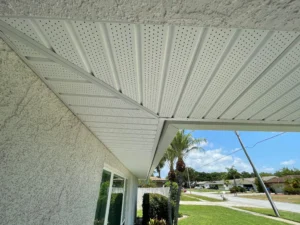
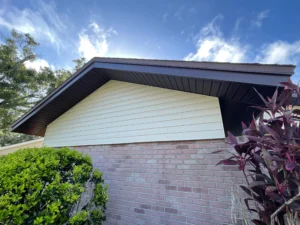
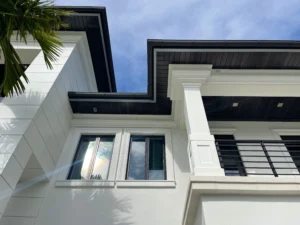
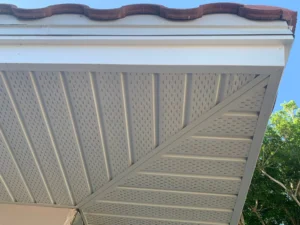
“Full soffit replacement is required when structural integrity is compromised.”
That sentence covers the situation where repair stops making sense. Structural integrity compromise means the framing, the fascia substrate, or the rafter ends that the soffit system attaches to are no longer capable of supporting the load and performing their function correctly. Rotten wood, delaminated sheathing, fascia boards that have separated from the framing behind them, these aren’t cosmetic problems and they can’t be fixed by replacing surface panels.
When the structure is compromised, the repair has to address the structure. That means removing the damaged soffit and fascia material, replacing the rotten framing components underneath, installing new fascia boards where the old ones have failed, and then reinstalling the soffit system on a solid substrate. That’s a full replacement sequence, not a patch.
And honestly, trying to patch over a compromised structure is worse than doing nothing. New soffit panels installed over rotten framing will fail again. The moisture problem continues. The rot continues to spread. The next time damage appears, it will be more extensive and more expensive than if the structural issue had been addressed the first time. A surface repair that hides a structural problem creates a situation where the next failure is harder to detect and more damaging when it finally becomes visible.
In Florida specifically, the window for addressing post-hurricane damage before additional weather events arrive is often shorter than it feels. A damaged soffit system that isn’t repaired before the next rain event lets more moisture in. The longer the exposure continues, the more wood is affected. Urgency matters here.
For a broader look at what soffit and fascia systems actually do for the roofline structure and attic ventilation, and how they’re correctly installed on Florida homes, see our breakdown of how soffit and fascia systems protect your roofline and attic in Florida’s climate.
A proper post-storm assessment of soffit and fascia isn’t a visual from the driveway. It requires getting access to the affected areas, physically inspecting the condition of the materials and framing, and making judgments based on what’s actually there, not what it looks like from below.
That assessment should happen promptly after storm events. The longer damaged soffit or fascia sits open to weather, the more the moisture situation develops underneath. An area that would have been a repair at day three can become a replacement by week three if additional rain events have reached the framing in the meantime.
What the inspector is looking for: whether the damage is contained to a defined area or has spread beyond it, whether the wood framing behind the affected section is solid or shows any signs of moisture infiltration or rot, whether the fascia boards are still properly secured to the structure or have separated, and whether the damage is limited to the surface panels or involves the substrate behind them.
Those four assessments determine the scope. And that scope is what the estimate should be built on, not a per-linear-foot number given over the phone without a site visit.
For an overview of how the siding, soffit, and fascia systems work together as an integrated exterior envelope and what deterioration in one component means for the others, see our guide to how siding, soffit, and fascia work together as your home’s exterior protection system.
Soffit can be repaired after hurricane damage when three conditions are met: the damage is isolated to a single section rather than spread across the roofline, the wood framing underneath is solid with no rot or moisture damage, and only the surface ventilation panels need to be replaced. When any of those conditions isn’t met, particularly when the underlying wood is compromised, full replacement is required. The surface damage visible from the ground doesn’t always tell you which situation you’re in, that requires a hands-on inspection of the framing behind the panels.
The condition of the wood itself is what determines whether a fascia board can be repaired or needs to be replaced. A fascia board that’s been physically displaced by wind but is still structurally sound can often be reinstalled and secured. A fascia board that shows rot, soft spots, or has separated from the rafter ends it’s attached to needs to be replaced before new soffit material goes on top of it. Painting or caulking over a damaged fascia board doesn’t fix the underlying problem, moisture infiltration continues and the rot spreads.
Structural integrity compromise in a soffit and fascia system means the framing components that the visible panels attach to, the rafter ends, fascia boards, and nailer framing, are no longer solid enough to properly support the installation. The most common cause in Florida is rot from moisture infiltration, which can develop from storm damage, years of inadequate ventilation, or previous repairs that didn’t address the substrate correctly. When framing is compromised, installing new surface panels over it produces a repair that looks correct but fails to fix the actual problem, and the failure continues underneath until it becomes visible again.
As quickly as possible. Every rain event that reaches open or damaged soffit after a hurricane adds moisture to the wood framing behind it, and in Florida’s humidity that moisture doesn’t dissipate quickly. An area where the wood framing is still solid immediately after the storm can develop rot within a few weeks if additional rain events occur before repairs are made. The difference between a repair scope and a replacement scope can change based on how long damaged sections are left exposed to weather, and prompt assessment keeps options open that delay closes off.