
That’s a question we get asked a lot here in Tampa Bay – especially right after storm season wraps up.
And the honest answer is: it depends on what we find when we actually get up there and inspect the damage.
“Can you repair soffit and fascia after hurricane season? Yes, if damage is isolated to a single section with no spread.”
So there are situations where a soffit repair makes complete sense. But there are also situations where a full soffit replacement is the only option that actually protects your home long-term.
Let me walk through how we think about this.
There are three main things we look for when deciding whether soffit and fascia repair is going to work.
First – is the damage isolated to a single section with no spread?
If the damage stayed in one spot and didn’t move to other areas of the soffit or fascia, that’s usually a good sign. It means the problem is contained. And we can target that section without touching the rest of the system.
Storm damage doesn’t always spread. Sometimes a branch hits one corner of the house. Or debris cracks a single panel. The rest of the aluminum soffit installation is fine. The fascia board looks solid.
In that case, soffit repair is the right move.
The second thing we check is the wood underneath.
“Yes, if wood underneath is solid with no rot.”
Because here’s the thing. The soffit panel itself isn’t what’s protecting your home. The panel is protecting the wood structure behind it.
So when we inspect soffit after a storm, we’re not just looking at the surface damage. We’re checking what’s happening behind the panels.
We probe the fascia board. We check the roof decking. We look for soft spots. Discoloration. Any sign that moisture got in and the wood started breaking down.
If the wood underneath is solid with no rot, we can do a clean soffit and fascia repair. Replace the damaged panels. Seal it up. Done.
But if the wood is compromised? That changes everything.
The third situation where repair works is when the problem is even simpler.
“Yes, if only ventilation panels need replacement.”
Vented soffit panels – those are the ones with small perforations that allow airflow into the attic. And those panels can crack or warp from heat or storm impact without any damage happening to the structure behind them.
When that’s the case, it’s a straightforward fix. We replace the damaged vented soffit panels and the house is back to proper ventilation.
Why does ventilation matter? Because in Florida, attic heat is a real issue. If the soffit vents are blocked or broken, hot air gets trapped up there. And that affects your roof. Your insulation. Even your energy costs.
So replacing those panels isn’t just cosmetic. It’s functional. And as long as the wood structure is still sound, vented soffit installation on the damaged sections solves the problem.
Now here’s where things shift.
“But full replacement is required when structural integrity is compromised.”
That’s the hard truth. If the wood behind the soffit or fascia has rotted, we’re not talking about a repair anymore. We’re talking about rebuilding the structure.
Once rot sets in, it spreads. Moisture doesn’t stay in one spot. It moves through the wood and into surrounding areas. And when that happens, patching a single section doesn’t solve the underlying problem.
We’ve seen cases where homeowners tried to patch soffit damage. Six months later, the rot had spread to the fascia board. Then to the roof decking. What started as a small repair turned into a much bigger project.
That’s why we recommend full soffit replacement when the structural integrity is compromised. It’s not about upselling. It’s about making sure the repair actually protects your home.
So when we walk around a house after hurricane season, here’s what we’re actually looking at.
First, we check for visible damage from the ground. Panels that are pulled loose. Sagging sections along the roofline. Water staining on the underside of the eave.
Then we get up close. We probe the fascia board. We check behind any damaged panels to see if moisture got in.
And we look at the scope of the damage. Is it one section? Or are there problems in multiple areas?
That inspection tells us whether we’re dealing with a soffit repair situation or a soffit replacement situation.
Because the goal isn’t just to make it look good. The goal is to make sure the system is doing its job – keeping weather out and protecting the structure behind it.
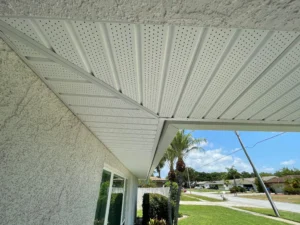
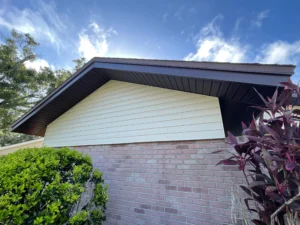
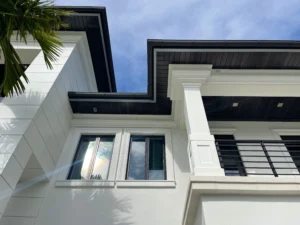
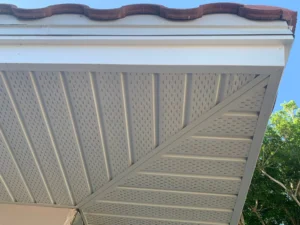
People think about hurricane damage as a single event. The storm hits. Something breaks. You fix it.
But the reality with soffit and fascia is that the damage is often cumulative.
Each storm season in Tampa Bay puts stress on the system. Wind pressure. Rain intrusion. Flying debris. And then after the storm passes, the heat and humidity go to work on anything that got exposed.
A panel loosens during one storm. Moisture gets in behind it during the next storm. By the third season, the wood underneath has been wet for a long time.
That’s when a small problem becomes a big one.
And that’s why we tell homeowners to get an inspection after every storm season. Not because there’s always visible damage. But because the damage that isn’t visible yet is usually the kind that costs more later.
When we’re already up on a house doing soffit and fascia work, we always walk the siding too.
Because the problems are usually connected.
If moisture got behind the soffit at the roofline, it may also be working its way down the wall behind the siding panels. Especially on two-story homes where the upper wall meets the eave.
Siding repair follows the same logic. Is the damage isolated or has it spread? Is the wall sheathing behind it still solid? Is this a siding replacement situation or can we address specific sections?
With house siding installation in Florida, the same environmental factors are at play. Heat expansion causes panels to buckle. Coastal air around Tampa Bay accelerates corrosion on fasteners. And storms drive water into any gap that exists.
A residential siding contractor who knows Florida conditions is going to check those things. Not just what’s visible from the street.
You don’t need to climb a ladder to notice early signs of soffit or fascia problems.
From the ground, look for panels that are pulling away from the eave. Any sagging along the roofline. Discoloration or staining that wasn’t there before. Panels that look like they shifted after the last storm.
Inside the house, check the attic after heavy rain. Moisture up there can be a sign that the vented soffit system isn’t working properly. Or that water found a way in somewhere along the eave.
These aren’t always emergency situations. But they’re worth knowing about before they turn into bigger problems.
Because Florida doesn’t give you a long window between “minor damage” and “structural issue.” The heat and humidity close that gap fast.
So can you repair soffit and fascia after hurricane season? Yes – if the damage is isolated, the wood is solid, and the structure is still sound.
But when structural integrity is compromised, full replacement is the only way to actually protect your home long-term.
Not always. It depends on three things: whether the damage is isolated to one section, whether the wood underneath is solid with no rot, and whether only the ventilation panels need replacement. If any of those conditions aren’t met – especially if the wood is compromised – full soffit replacement is usually required.
The key is what’s happening behind the panels. If the fascia board or roof decking has rot or long-term moisture damage, repair won’t solve the problem. A professional inspection after storm season can tell you whether the structure is still solid or whether full soffit and fascia repair has turned into a replacement situation.
Storm impact is the main cause – wind pulling panels loose, debris hitting the eave, rain getting behind cracked sections. After the storm, Florida’s heat and humidity accelerate deterioration on any exposed wood. That’s why damage that looks minor right after a storm can get worse over time if it’s not addressed.
Vented soffit panels allow hot air to escape from the attic. In Florida, attic temperatures can get extreme, and poor ventilation puts stress on roofing materials and insulation. When vented soffit panels are cracked or blocked after a storm, that airflow stops – and the heat buildup creates its own set of problems beyond just the soffit system.
Yes. Even if you don’t see visible damage from the ground, moisture can get behind panels during a storm and start compromising the wood structure. An inspection catches those problems while they’re still repairable – before they turn into full soffit replacement projects that cost significantly more.
Often. If moisture got behind the soffit at the roofline, it may also be working its way down the wall behind the siding panels. That’s especially common on two-story homes. A residential siding contractor will check both systems during a post-storm inspection to make sure water intrusion hasn’t affected multiple areas of the exterior.