
Alright, so you’re looking at your siding and something’s off. Maybe it’s a crack. Maybe some panels are pulling away from the wall. Maybe you just painted it two years ago and it already looks faded and rough. Whatever it is – you’re wondering if you can patch it or if the whole thing needs to go.
Honest answer? It depends. It depends on what’s actually going on, how long it’s been going on, and what material you’re dealing with. Here in Tampa Bay, Florida, siding takes a beating that most people up north just don’t deal with. The humidity alone does things to exterior siding that can take years off its lifespan. And then you add the storms. The heat. The wind-driven rain every summer. The sun that just doesn’t let up.
So let me walk through the five most common siding issues I see on homes around here – what they look like from the outside, what’s usually going on behind them, and when we’re talking repair versus when I’d tell a homeowner to think about replacement.
A crack here and there – that’s what most homeowners spot. Or a panel that’s buckling a little, maybe bowing out in the middle. Sometimes they tell me one corner is pulling away from the wall. Could be a fastener popped, could be the material itself expanding and contracting over the years.
In Florida, thermal expansion is a real thing. Vinyl siding especially – it moves. It gets hot, it expands. Cools down at night, contracts. Do that for ten, twelve years and the fasteners start losing their grip. Or the panels start to warp because they were installed a little too tight to begin with, and they had nowhere to go when they heated up.
Wind is the other one. We get consistent wind exposure around Tampa Bay, and older siding that wasn’t installed with the right overlap or fastener spacing starts to come loose. Not all at once – just… gradually. Until one storm pulls a panel clean off.
One or two cracked panels, or one section that’s warping? That’s usually repairable. You replace the damaged panels, check the fasteners around them, done.
But if the warping is happening across multiple sections – if it’s widespread – that usually tells me the installation was the problem, or the material has just aged out. At that point you’re better off looking at a full replacement. Patching a few panels when half the siding is doing the same thing… you’re going to be back out here in two years doing it again.
Sometimes it’s paint bubbling or peeling on the interior walls near windows or at the base of the exterior. Sometimes it’s a musty smell coming from a specific room. Sometimes a homeowner notices the drywall is soft in a spot near an exterior wall.
What they don’t notice – until it’s bad – is where the water is actually getting in.
Water intrusion behind siding is… it’s one of the sneakiest problems out there. The siding looks fine from the street. Everything looks fine. But water is getting behind it – through a failed seam, a bad caulk joint around a window or door, cracked panels, or gaps where the siding meets trim – and it’s just sitting back there.
Here in Tampa Bay, we get serious rainfall. Tropical storms, afternoon thunderstorms from June through October. Wind-driven rain gets into gaps that wouldn’t even matter in a dry climate. And once moisture is behind the siding consistently? You’ve got a problem that’s growing whether you can see it or not.
If you catch it early – if the moisture intrusion is limited to one small area and the sheathing behind it is still sound – you can remove those panels, dry everything out, reseal, and put it back together. That works.
If the water has been getting in for a while… that’s when you start pulling panels and finding rotted sheathing, damaged housewrap, maybe even compromised framing. At that point you’re not just replacing siding. You’re getting into a bigger repair. And replacement is almost always the right call because you need to fix what’s behind it and start fresh.
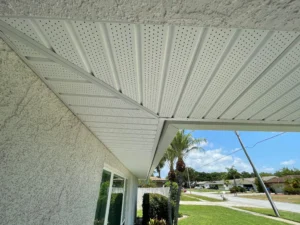
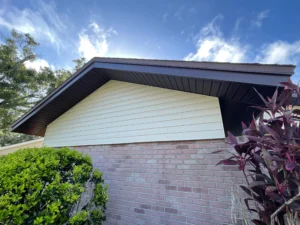
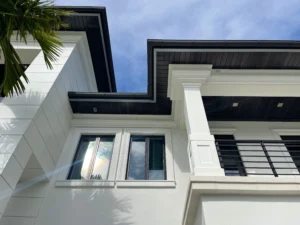
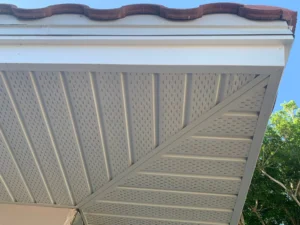
Sometimes nothing. That’s what makes this one so frustrating. The homeowner sees a small dark spot, maybe some discoloration on the outside of the siding. Or they knock on a section of the wall and it sounds kind of hollow – different from the rest. Or they push on a panel and it gives a little more than it should.
Mold and rot behind siding is almost always the result of moisture intrusion that’s been going on for a while. In Florida’s humidity, this accelerates. Wood rot especially – once it starts, it doesn’t stop on its own. It spreads. And the siding above it might look perfectly fine.
I’ve pulled siding off homes in Tampa Bay where the exterior looked okay from twenty feet away and found significant rot on the sheathing behind it. Not a little rot – structural issues. The housewrap had failed, moisture had been getting in for years, and nobody caught it because the siding itself wasn’t showing obvious damage.
Because rot affects more than the siding. It can affect the sheathing – the OSB or plywood underneath. In some cases it gets into the framing. When that happens, you’re not having a siding conversation anymore. You’re having a structural repair conversation. And those get expensive fast.
This is one area where I’d tell any homeowner in Florida: if you’ve had moisture issues or you have older siding that you haven’t looked behind in a long time – have someone take a closer look. Not because I’m trying to find work, but because catching rot early is significantly less expensive than catching it late.
If it’s limited to one section and the framing is still solid, you can often repair it. But if the rot is widespread or the sheathing is compromised across a larger area – replacement is the only real answer. You can’t just cover up rot. It’ll keep going.
After a bad storm, it’s usually obvious. Missing panels. Panels that are cracked or punctured. Siding that got hit by debris. Or panels that are still there but are visibly bent, warped, or out of alignment.
What’s less obvious is the damage to the areas around those panels. The trim. The underlayment. The corners and seams that got hit by wind-driven rain for six hours.
Look – anyone living in Tampa Bay knows how storms hit. It’s not just the wind during a tropical event. It’s the sustained wind from the bay, the wind-driven rain that comes in sideways, and the debris. A tree branch doesn’t have to go through your siding to damage it. Flying debris hitting at the right angle and speed can crack panels, break seams, and compromise the entire water barrier.
And then there’s the slow kind of storm damage – the kind that happens over years. Not one dramatic event, but year after year of storm exposure gradually working on older siding until the fasteners are corroded, the seams are compromised, and the material is brittle.
Storm damage is one area where the answer really depends on the scope. Two or three damaged panels from debris impact? That’s a repair. No question.
But if the storm event was significant – a named storm, a major wind event – and there’s damage across a large portion of the home’s exterior, replacement often makes more sense. You also want to check what’s behind the damaged area, because storm damage can compromise the underlayment even when the siding itself looks like it mostly held up.
Worth noting: insurance sometimes covers storm damage to siding. It depends on your policy and the extent of the damage. Something to look into before just paying out of pocket.
The homeowner just… knows the siding looks old. The color’s faded. It’s chalky. The surface texture is rough where it used to be smooth. And maybe they’ve had a panel or two replaced over the years – but now the patches don’t even match the original color anymore because the rest of the siding has faded so much.
Siding doesn’t last forever. The lifespan varies a lot by material – vinyl siding typically goes 20 to 40 years depending on quality and conditions. Wood siding can last longer but needs more maintenance. In Florida, harsh UV exposure and high humidity push all those timelines shorter than the manufacturer’s estimate, because those estimates usually assume more temperate conditions.
After a certain point, the siding just isn’t doing its job properly. It’s brittle. The color fades. Caulk joints that were fine a few years ago are now cracking and pulling away. And you find yourself having the same conversation with a contractor every couple of years: this panel cracked, this section is peeling, this corner is pulling away.
This is where I try to be straight with homeowners. If you’ve repaired the same siding three or four times in the last five years – you’re spending money to maintain something that’s past its useful life. At some point, the cumulative cost of those repeated repairs adds up to more than what replacement would have cost. And you still end up with old siding.
When the repairs are consistent, when the material is obviously aged, when the home is 25 or 30 years old with original siding – replacement is usually the smarter financial decision. Not always. But usually.
And when you replace, you’re not just getting new siding. You’re getting the chance to address anything that’s happened behind the siding over the years, improve the insulation if the budget allows, and start fresh with material that’ll hold up to Florida conditions for the next couple of decades.
Here’s the honest version of how I think about it when I’m looking at a house:
Age of the siding. If it’s under 15 years old and the damage is isolated, repair makes sense. If it’s 20-plus years old – especially in Florida where the climate is hard on exterior materials – I start leaning toward replacement depending on what we find.
Extent of the damage. Is it one panel? Two? A section? Or is it happening in multiple places around the house? Isolated damage is a repair. Widespread issues lean toward replacement.
What’s behind the siding. This is the one homeowners can’t see on their own. If there’s rot, compromised sheathing, or failed housewrap – that changes the whole conversation. You can’t just put new siding over a problem.
The material type. Some materials repair more easily than others. Fiber cement, for example – you can match it reasonably well for a repair. Older aluminum siding? Matching panels can be nearly impossible.
And the last thing – cost over time. I’d rather tell a homeowner the honest math: if you’re going to spend $1,500 in repairs now on siding that’s going to need $1,500 more in two years… sometimes spending more now to replace it is the better deal long-term.
Honestly, the age and extent of the damage are the two biggest factors. If the siding is relatively new – say, under 15 years – and the issue is limited to one area, repair is usually the right move. But if you’ve got damage showing up in multiple spots, if the siding is old, if you’ve been patching the same problems repeatedly – that’s when replacement starts making more financial sense. The other thing I’d look at is what’s happening behind the siding. That part you usually can’t see from the outside. If there’s rot or water damage behind it, sometimes you end up doing a bigger repair anyway, and replacement is the cleaner option.
Yeah, absolutely. Cracks in siding – even small ones – are entry points for water. In Florida, where we get heavy rain and wind-driven storms regularly, water finds its way into even small gaps. Once it’s behind the siding, it can sit against the sheathing, the housewrap, and eventually work its way into the wall. The tricky part is that the damage happens slowly and you often don’t notice it until it’s become a bigger issue – mold, rot, soft drywall. So cracked siding isn’t just cosmetic. It’s a water intrusion risk, and in Tampa Bay’s climate, that risk is real.
The big ones I see around Tampa Bay are moisture intrusion and water damage – that’s number one, no question. Then warping and buckling from the heat and thermal expansion, especially on vinyl siding. Mold and mildew on the surface and sometimes behind the siding. Storm and wind damage after tropical weather events. And then just general aging that happens faster here than in drier, cooler climates. The UV exposure alone in Florida does things to siding that most manufacturers don’t fully account for in their warranty estimates. The sun fades it, makes it brittle, breaks down the surface coating. Add humidity and you’ve got a rough environment for exterior siding compared to most of the country.
It depends – and I know that’s not a satisfying answer. But here’s the way I think about it. If the siding is older than 20 years and you’re repairing it for the second or third time, do the math. What have you spent in repairs over the last five years? Because if it’s adding up to a significant number, you might be at the point where replacement is actually the cheaper option over time. Plus, with old siding, you don’t know what’s been happening behind it. Sometimes when you go to repair one section, you pull it off and find problems that have been building up for years. Replacement lets you start clean, address anything behind the siding, and get material that’ll actually hold up in Florida conditions. That said – not every old siding situation is a replacement situation. If the damage is genuinely minor and isolated, repair is fine. It really does depend on what’s there.