
If you’re getting quotes for Hardie siding and the numbers seem all over the place, you’re not imagining it. Fiber cement pricing has a wider range than most people expect – and the difference between a $1 per square foot job and a $3 per square foot job isn’t random. It comes down to which product you’re using and what the design requires. Here’s how it actually breaks down.
People Google ‘Hardie siding cost’ and expect one number. It doesn’t really work that way.
James Hardie makes multiple product lines. The entry-level fiber cement panels – straight runs, standard profiles – those can sit around $1 per square foot for material. That’s the baseline. But once you start moving into specialty profiles, thicker boards, or architectural detail work, the price moves.
So what usually happens is a homeowner gets a number from a friend, or they see something online, and they expect every Hardie quote to look the same. Then they get a quote on an Artisan install and wonder why it’s three times what they heard. The product is just different.
The Artisan line is Hardie’s premium product. Thicker – 5/8 inch – compared to the standard HardiePlank, which runs at 5/16. That extra material adds rigidity, a deeper visual profile, and a look that’s closer to real wood lap siding.
“When we work with the Artisan profile, we can create custom architectural accents and modern exterior features that standard fiber cement just can’t replicate.”
That thickness matters on Florida homes especially. The heat expansion cycles here, the moisture exposure from Gulf Coast humidity – thicker board handles that better over time. It also holds paint longer. But it costs more. That’s just the reality.
Artisan material at $2–$3 per square foot isn’t unusual. If the design has corners, custom detailing, mixed profiles – labor complexity goes up too. The material cost is one part of the number. Installation is the other.
This is where a lot of homeowners get confused. The $1–$3 per square foot figure is material cost. Installed price is different.
Installation on fiber cement is more labor-intensive than vinyl. It’s heavier. It requires specific fastening, flashing, and sealing – especially in Florida where moisture intrusion is a real issue. Lutz, Land O’Lakes, Riverview, anywhere in Hillsborough County – the humidity and rain exposure means the installation details aren’t optional.
So when you’re looking at a full quote for siding replacement near you, the material cost per square foot is the starting point. Labor, substrate prep, old siding removal, trim work – those are all on top of that number.
A few things push the final number higher:
And honestly, the substrate condition is the one that surprises people most. You open up a wall on a Tampa Bay home that’s been there 15–20 years, and sometimes there’s moisture damage that nobody knew about. That’s not something you see in the quote until the work starts.
Not every job needs Artisan. That’s worth saying.
Standard HardiePlank handles the majority of residential installs fine. It’s durable, it’s proven, and it performs well in Florida’s climate. If you’re replacing like-for-like on a traditional home profile, standard fiber cement usually does the job.
Artisan starts making sense when the design calls for it. Homes with craftsman details, modern exterior renovations, or projects where the visual depth of a thicker board profile actually matters – that’s where the premium product earns its cost. You can see the difference. The shadow lines are deeper. It looks like real wood in a way standard Hardie doesn’t quite achieve.
If you’re comparing materials for your specific project, it helps to see the full breakdown. For a detailed cost and performance comparison, see our full guide to Hardie siding vs. vinyl in Tampa Bay – it covers both material and long-term maintenance differences side by side.
A siding contractor near you should be doing more than measuring square footage. Before any number gets put in front of you, there should be a wall assembly inspection.
That means checking what’s behind the existing siding – is the sheathing intact? Is there moisture infiltration? Is the house wrap still doing its job? In Hillsborough County and around Tampa Bay, those questions matter. You can put $3-per-square-foot siding on a compromised wall and have water problems inside two years.
The material cost is the beginning of the conversation. The wall condition is what determines what the job actually needs.
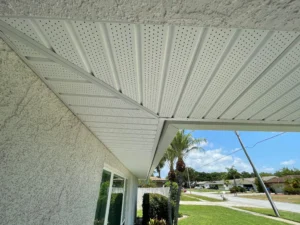
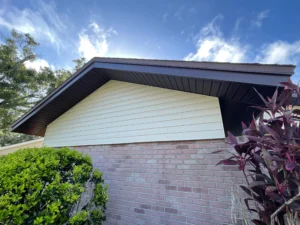
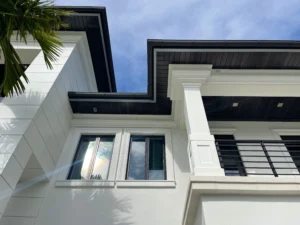
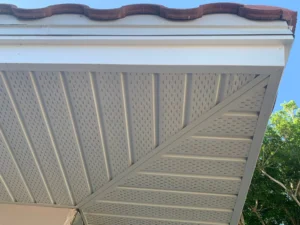
Basic fiber cement material starts around $1 per square foot. Premium James Hardie products like the Artisan 5/8″ profile run $2–$3 per square foot. That’s material only – installed cost depends on labor, design complexity, and wall condition.
It depends on the project. Artisan’s 5/8″ thickness gives you a deeper visual profile that standard fiber cement doesn’t replicate. For architectural accents, modern exterior renovations, or design-forward homes, the difference is visible. For straightforward replacements, standard HardiePlank typically handles the job at lower cost.
Fiber cement doesn’t swell, rot, or warp the way wood does in Florida’s humidity. It holds paint well and resists impact. Thicker profiles like the Artisan handle heat expansion cycles better than standard vinyl over time. In Gulf Coast climates, that durability matters.
Square footage is just the start. A real estimate accounts for the product line, design details, wall condition, and any substrate repairs needed. A contractor should inspect the wall assembly before quoting – not just measure the exterior. That inspection is what keeps surprises from showing up mid-job.