
Vinyl siding cost ranges from $0.70 per square foot for basic lap siding up to $2.00 per square foot for premium vinyl shaker or shingle profiles. The specific price depends on two variables: the thickness and quality of the vinyl panel, and the design profile you choose. Your budget and design goals determine where you land in that range.
This is a question that comes up constantly, and the honest answer is: it depends. Not in a vague way. There are three clearly defined price tiers within vinyl siding, and each one reflects a real difference in the material, not just a markup. Understanding those tiers before you get into estimates helps you have a more useful conversation with a contractor and avoids surprises when the numbers come back.
“If you will go with a very basic vinyl siding, lap siding double four-oh-five with the 0.04 thickness, it should be about 70 cents per square foot.”
That’s the floor. Double 4 lap siding at 0.04 thickness is the most widely installed and most affordable vinyl siding product. It’s what most builder-grade installations use. The panel profile is a standard horizontal lap with a four-inch reveal, the thickness is 0.04 inches, and the price reflects both the simplicity of the product and the efficiency of installing it.
At $0.70 per square foot, the number looks attractive. And for certain projects, it’s the right choice. A rental property, a secondary structure, or a situation where the budget is genuinely constrained and the goal is functional exterior cladding rather than long-term performance can reasonably land at this tier.
But 0.04 thickness is the thinnest product in the vinyl category. Thinner panels dent more easily from impact, they show surface irregularities more visibly on the finished wall, and they provide less insulation value than thicker alternatives. The $0.70 starting point buys you vinyl siding. It doesn’t buy you the best vinyl siding. That distinction matters when you’re planning a project on a home you intend to keep and maintain over time.
In Florida specifically, thinner vinyl also has less capacity to withstand the heat cycling that Tampa Bay summers produce. Vinyl expands and contracts with temperature. Thinner panels have less structural resistance to that cycling, which means warping and surface distortion tend to appear sooner on 0.04 products than on heavier gauge panels.
“Then next thing we would add thickness and get to the better quality of vinyl, and then we’re looking at about a dollar, maybe a dollar ten or fifteen per square foot.”
Moving up in thickness is the most straightforward upgrade in vinyl siding. The profile may look similar to the entry-level product, standard horizontal lap, same reveal, but the material itself is heavier, more rigid, and performs differently once it’s on the wall.
Thicker vinyl panels dent less easily. They hold their profile better through heat cycling. They provide more insulation value, which matters for energy performance in a Florida home where cooling costs are a significant operating expense. And they typically carry a better surface finish, the color is richer, the texture is more defined, and the installed appearance is noticeably different from the thinner product even from the street.
The $1.00 to $1.15 per square foot range is where most residential re-siding projects in the Tampa Bay area land when the homeowner wants quality vinyl rather than minimum-spec vinyl. It’s not the cheapest option. But it’s the level where the material starts to perform like a real exterior upgrade rather than a temporary solution.
And honestly, for most homeowners comparing vinyl to fiber cement or other higher-tier materials, this is the vinyl tier worth comparing. Entry-level 0.04 vinyl is a different product category than quality mid-range vinyl, and mixing those two tiers in a comparison distorts the picture. A $1.00 to $1.15 mid-range vinyl and a $1.50 all-in Hardie installation are a legitimate comparison. A $0.70 vinyl and a $1.50 Hardie are not the same comparison, because the materials aren’t in the same performance tier.
For a direct comparison of how mid-range vinyl holds up against fiber cement over time in Florida’s climate, including maintenance costs and lifespan, see our breakdown of vinyl versus Hardie fiber cement for Florida homeowners.
“But there are other options available which is vinyl shaker, vinyl shingles. Those can be pricey and cost can go up to a dollar fifty, sometimes even two dollars.”
This is the tier that most homeowners don’t know exists until they start looking at design options. Standard vinyl siding is a horizontal lap product. That’s what most people picture when they think of vinyl siding. But vinyl shaker panels and vinyl shingles are different products entirely, and the price reflects that.
Vinyl shaker siding replicates the flat-panel shaker aesthetic that’s common on higher-end homes. The panels are wider, the profile is more architecturally substantial, and the installed appearance reads differently than standard lap siding. It’s often used as an accent treatment on gable ends, under rooflines, or in combination with lap siding on the main wall surfaces to create a layered look.
The cost is higher than standard lap for two reasons. The material itself costs more per square foot than basic or mid-range lap panels. And the installation is slower because the individual pieces are larger and the alignment requirements are more precise. More time on the wall means more labor, and that labor cost is part of the per-square-foot price.
Vinyl shingles replicate the staggered cedar shake look. Individual panels, irregular bottom edges, installed in overlapping rows that create the shadow lines and visual texture of real shingle siding. It’s a distinctive look, and it’s one of the more labor-intensive vinyl products to install correctly.
Each row requires individual pieces rather than a single continuous panel. More pieces means more cuts, more fastening points, and more time per square foot. On a full wall elevation, vinyl shingles take significantly longer to install than lap siding of any thickness. That’s where the cost from $1.50 up to $2.00 per square foot comes from. The product itself is more expensive, and the installation is more involved.
RIA Construction installs all three vinyl profile types on Tampa Bay residential projects. The most common use case for premium vinyl profiles is accent work, using shaker or shingle panels on specific elevations while running standard or mid-range lap on the primary wall surfaces. That combination gives the home an architectural detail without pricing the entire project at the premium tier rate.
“The thicker the material, the better the insulation, durability, and overall finish.”
That line from the caption captures the practical reason the thickness variable exists, and it’s worth understanding clearly before making a material decision based on price alone.
Insulation value in vinyl siding comes partly from the panel thickness itself and partly from whether insulated backing is added behind the panel. Thicker panels without insulated backing provide more insulation than thinner panels without backing. In Florida, where cooling costs are the primary energy concern, anything that reduces the heat transfer through exterior walls is relevant to operating costs over the years you own the home.
Durability is the other dimension. Thicker vinyl is more resistant to impact damage from debris, which is a real consideration in storm-season Florida. A hail event or wind-driven debris that dents or cracks a 0.04 panel may leave a heavier gauge panel undamaged or with only superficial marking. On a home in Tampa Bay where storm seasons bring real weather events regularly, that difference is not theoretical.
And the finished appearance is genuinely different between thin and thick vinyl. Thick panels hold their flat profile better across the wall surface. Thin panels show more variation in the installed surface, subtle waviness and shadow variation that becomes more visible as the material ages. That visual difference is subtle on day one and more pronounced at year five and beyond.
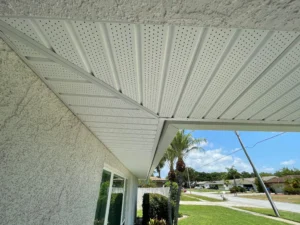
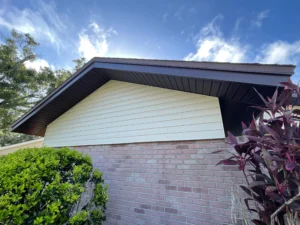
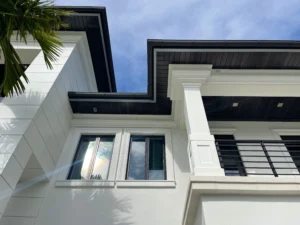
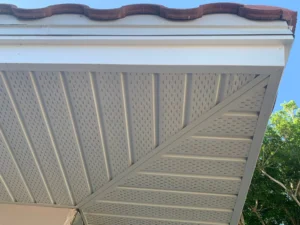
“Your budget and design goals determine where you land.”
That’s the honest framing, and it’s the right one. There’s no single right answer for every project. There’s a right answer for a specific home, a specific budget, and a specific set of goals.
If the goal is functional, affordable exterior cladding and the budget is genuinely constrained, entry-level lap siding at $0.70 per square foot is a legitimate choice. It’s not wrong. It’s just the floor of the range, with the limitations that come with the floor.
If the goal is quality vinyl that performs well and looks good for 15 or more years, mid-range at $1.00 to $1.15 is where that conversation lives. It’s the tier where thickness starts to deliver real-world performance advantages, and it’s the fair comparison point when evaluating vinyl against other material categories.
If the goal is architectural distinction, shaker accents on a gable end, shingle panels on a dormer, a premium profile that reads as a design choice rather than just cladding, the premium tier at $1.15 to $2.00 is where that’s available in vinyl. That price is real, and so is the visual difference in the finished result.
The mistake most homeowners make is treating vinyl siding as a single product with a single price. It isn’t. There’s a basic product, a quality product, and a premium product, and they’re genuinely different in how they look, how they perform, and what they cost. Understanding that before the estimate conversation starts leads to better decisions and fewer surprises when the proposals come back.
For a full breakdown of how vinyl siding cost compares to other exterior cladding materials, including Hardie fiber cement and hybrid PVC composite, see our guide to average siding installation costs across all material types.
Basic double 4 lap siding at 0.04 thickness is the entry-level vinyl product and costs approximately $0.70 per square foot installed. It’s the most affordable starting point in the siding category and is widely used on builder-grade installations. The trade-off for that price is the thinnest panel in the vinyl range, which provides less impact resistance, less insulation value, and is more susceptible to surface distortion from heat cycling over time compared to thicker products.
Mid-range vinyl siding at $1.00 to $1.15 per square foot typically means a heavier gauge panel with greater thickness than the entry-level 0.04 product. That thickness difference delivers more impact resistance, better insulation value, a more rigid profile that holds its shape better through heat cycling, and a finished surface appearance that’s noticeably more substantial than thinner panels. The profile may be the same standard horizontal lap, but the material itself performs differently in ways that become more visible over the years.
Vinyl shaker panels and vinyl shingles are more expensive than standard lap siding for two reasons: the material itself costs more per square foot than basic or mid-range lap panels, and the installation is more labor-intensive. Shingle profiles use individual pieces rather than continuous panels, requiring more cuts, more fastening points, and significantly more installation time per square foot. That combination of higher material cost and higher labor cost is what drives the price from $1.15 up to $2.00 per square foot for premium vinyl profiles.
It depends on how long you plan to own the home and what your realistic maintenance expectations are. Mid-range vinyl at $1.00 to $1.15 per square foot is a legitimate option for Florida homes with the right expectations: it requires more maintenance than fiber cement over a long ownership period, fades under UV exposure, and has less heat cycling resistance than cement-based products. For a home where the goal is a long-term low-maintenance exterior, Hardie fiber cement at approximately $1.50 all-in is the more practical choice. For a project with a tighter budget or shorter ownership horizon, quality mid-range vinyl is a reasonable decision.